第11

Comparative Review: PV-BAT Hybrid Inverters vs. Standard Inverters—What’s the Difference?

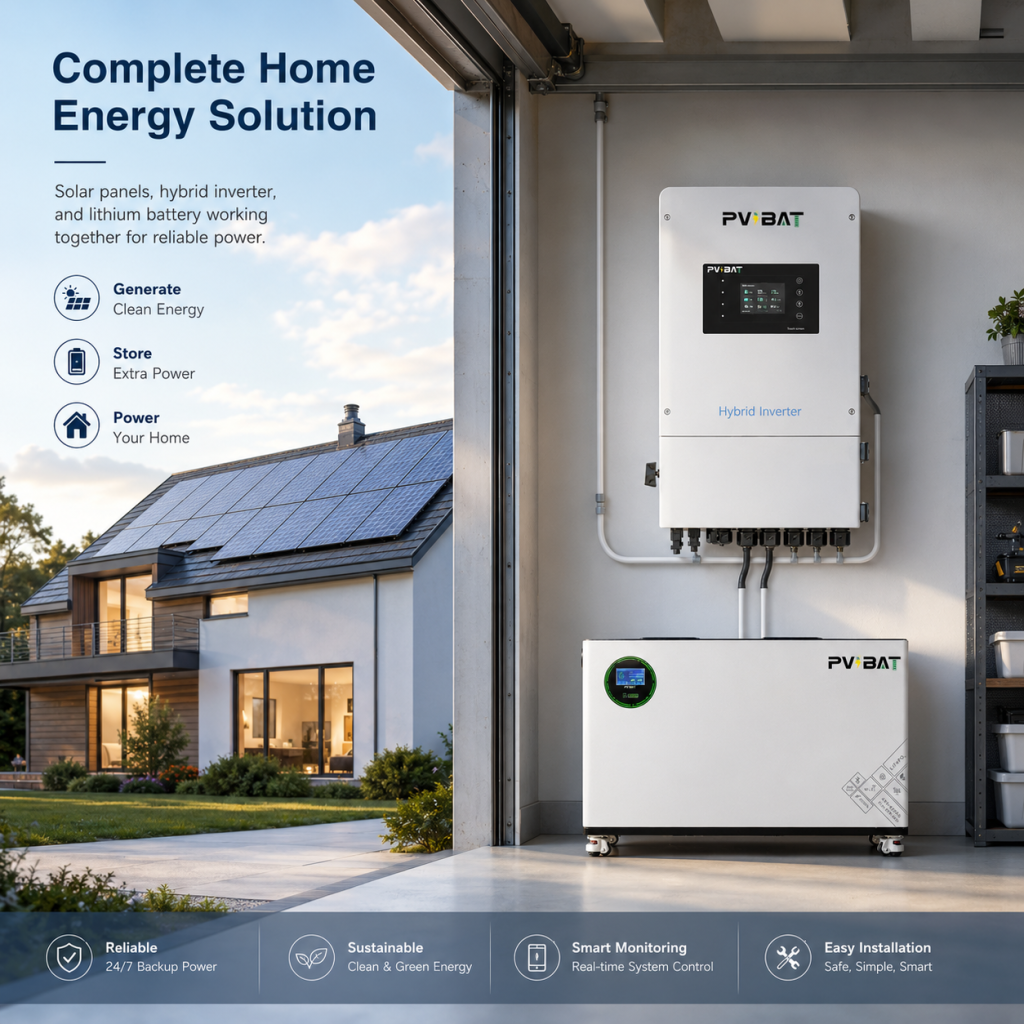
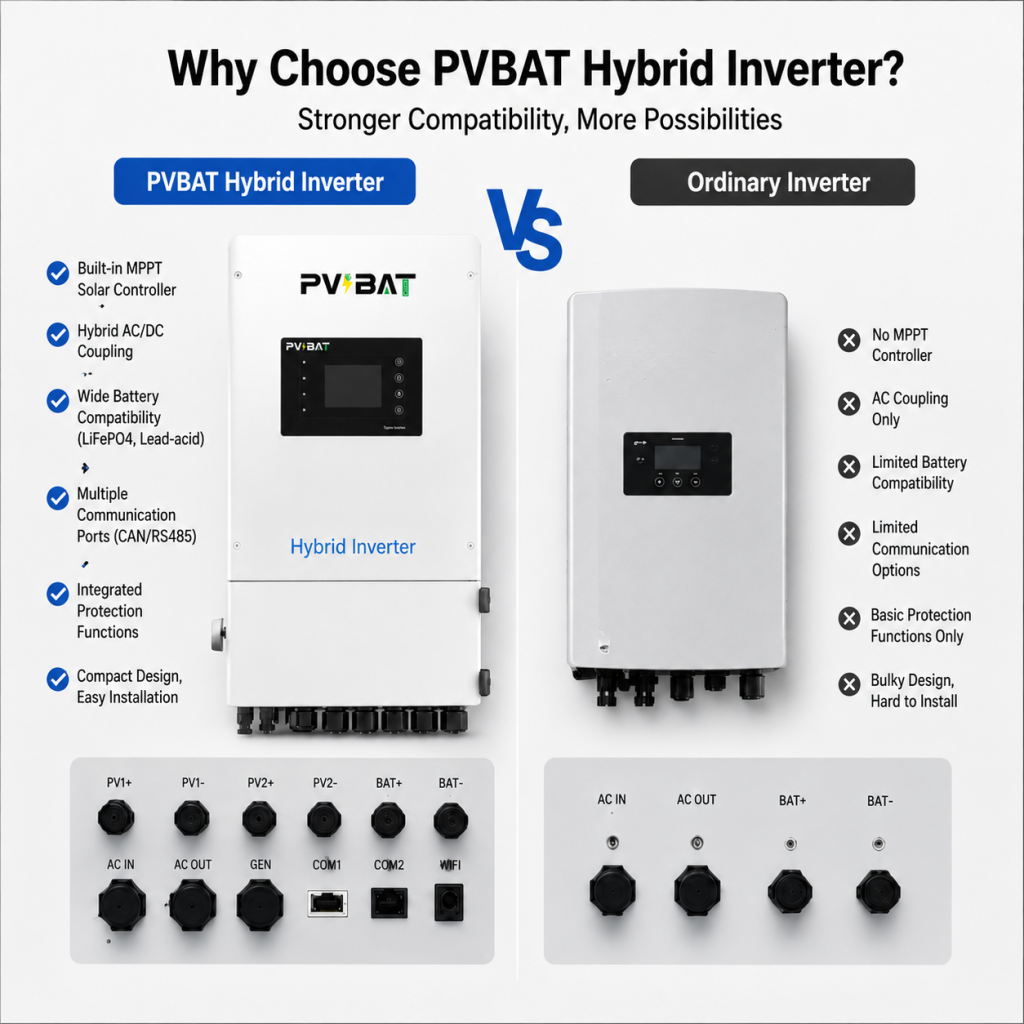
In the energy storage market, there is a wide variety of inverter products available. Users often overlook the differences between standard inverters and hybrid inverters. Many users make uninformed choices, resulting in their energy needs not being met and even leading to a waste of resources. Today, through a real-world comparison, we will analyze the core differences between PVBAT hybrid inverters and standard inverters to help users clarify their needs and select the energy storage core equipment that best suits them. We will also provide a comparative evaluation of inverters to assist users in choosing high-quality hybrid inverters. Difference 1: Functionality. Conventional inverters only perform a single conversion—“PV power generation to AC electricity”—and cannot support energy storage or backup power supply. When the PV system is not generating power, users must rely on the grid, making them unable to handle power outages and limiting their practicality; In contrast, PVBAT hybrid inverters integrate four key functions: PV charging, battery storage, grid interaction, and backup power supply. They enable closed-loop management of “self-generation and self-consumption, surplus power storage, and emergency backup,” perfectly meeting the diverse energy needs of households and serving as the epitome of multifunctional hybrid inverters. Difference 2: Level of Intelligence. Most conventional inverters lack intelligent control systems, making them unable to automatically adjust power generation output or power supply priorities. They require manual intervention, involve cumbersome operations, and demand a certain level of technical expertise from users; The PVBAT hybrid inverter features a built-in intelligent control system, equipped with an LCD touchscreen and a mobile app for monitoring. It displays real-time operational data, automatically optimizes power supply priorities among PV, the grid, and the battery, and supports switching between multiple operating modes. It requires no manual intervention, is easy to operate, even for beginners, highlighting the advantages of smart hybrid inverters. Difference 3: Compatibility and Scalability. Most standard inverters are compatible only with specific types and capacities of batteries and solar panels, offering poor scalability. They cannot be expanded to meet user needs, resulting in high costs for future upgrades; The PVBAT hybrid inverter is compatible with various battery types, including lead-acid and lithium batteries, and supports parallel operation of multiple units. It allows for flexible expansion based on the PV system’s power output and electricity demand, making it suitable for households of different sizes and energy needs. With more convenient future upgrades, it is the preferred choice for highly scalable inverters. Difference 4: Safety and Reliability. Conventional inverters have inadequate protection mechanisms, making them prone to issues such as overcurrent, overvoltage, and overheating, which can shorten equipment lifespan and even pose safety hazards; PVBAT hybrid inverters feature built-in multi-layer protection mechanisms against overcurrent, overvoltage, overheating, short circuits, and ground faults. They comply with international safety standards, undergo rigorous quality testing, and offer a long service life. Additionally, they provide comprehensive after-sales support, ensuring greater peace of mind and making them the safest and most reliable hybrid inverters. Through this comparison, it is evident that the distinction between PVBAT hybrid inverters and standard inverters lies not only in the comprehensiveness of their features but also in their precise understanding of user needs and strict control over product quality. As such, they are the ideal core inverters for home energy storage systems.

Comparative Review: PV-BAT Hybrid Inverters vs. Standard Inverters—What’s the Difference? Read More »

第十

Home Energy Storage System Maintenance Guide: PVBAT Shows You How to Extend the Lifespan of Your Equipment

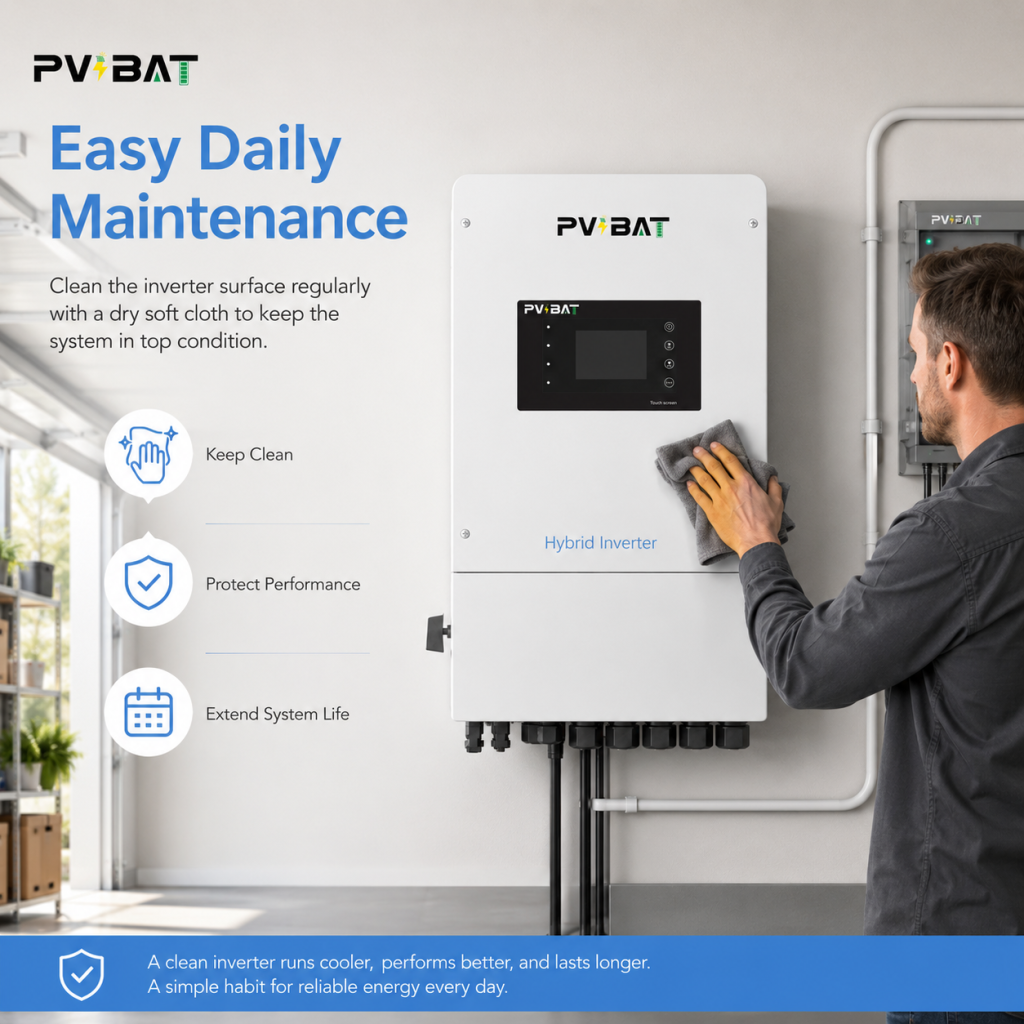
The service life of a home energy storage system (inverter + battery + solar panels) depends not only on the quality of the products themselves but is also closely related to daily maintenance. Many users neglect routine maintenance after installing their systems, leading to equipment failures, reduced efficiency, and a shorter lifespan, which in turn increases operating costs. Based on the characteristics of its products, PVBAT has compiled a practical maintenance guide for home energy storage systems to help users properly maintain their equipment, extend its service life, ensure long-term stable operation, and assist users in performing routine maintenance on their PV storage systems. First, daily maintenance of the inverter. Regularly inspect the inverter’s installation environment to ensure adequate ventilation and that no debris is obstructing airflow, thereby preventing the equipment from overheating; Regularly clean dust and debris from the inverter’s surface using a dry, soft cloth; never rinse with water to prevent short circuits; regularly inspect the terminal blocks to ensure connections are secure, with no loosening or oxidation; monitor the inverter’s operating status; if a fault alarm occurs (such as error codes F01–F64), contact an after-sales engineer immediately for resolution—never disassemble the unit yourself to avoid causing further damage—and perform routine inverter maintenance. Second, daily maintenance of lithium-ion batteries. Lithium-ion batteries should be stored in a dry, well-ventilated, and cool environment, away from direct sunlight and rain. Maintain a storage temperature between 10°C and 35°C to prevent extreme temperatures from affecting battery performance. If the battery will not be used for an extended period, charge it to 60% SOC (State of Charge). Every three months, discharge it to 30% and then recharge it to 60% to prevent irreversible damage caused by deep discharge; Regularly inspect battery wiring and connectors to ensure secure connections with no looseness or damage. If the battery exhibits abnormalities such as swelling, leakage, or unusual odors, stop using it immediately, contact after-sales service for resolution, and ensure proper maintenance of the energy storage lithium-ion batteries. Finally, maintenance of the solar panels and the entire system. Regularly clean dust and stains from the surface of the solar panels to prevent shading and ensure optimal power generation efficiency; Inspect the solar panel mounts to ensure they are secure, with no loosening or deformation; regularly inspect the system’s cabling to ensure there is no damage or aging, preventing short circuits; conduct a comprehensive system commissioning once a year to check the coordinated operation of the inverter, battery, and solar panels, promptly identifying and resolving potential issues to prevent problems before they arise, and ensuring proper daily maintenance of the solar panels and comprehensive maintenance of the energy storage system. PVBAT recommends that users perform regular maintenance on their energy storage systems in accordance with the maintenance guidelines. Users may also contact PVBAT’s professional after-sales team to arrange periodic inspection services, ensuring long-term stable operation of the system, maximizing equipment lifespan, reducing operating costs, and receiving professional support for energy storage system maintenance.

Home Energy Storage System Maintenance Guide: PVBAT Shows You How to Extend the Lifespan of Your Equipment Read More »

第6

Unveiling the PVBAT Lithium-Ion Battery BMS System: Why Does It Ensure Safe and Long-Lasting Battery Performance?

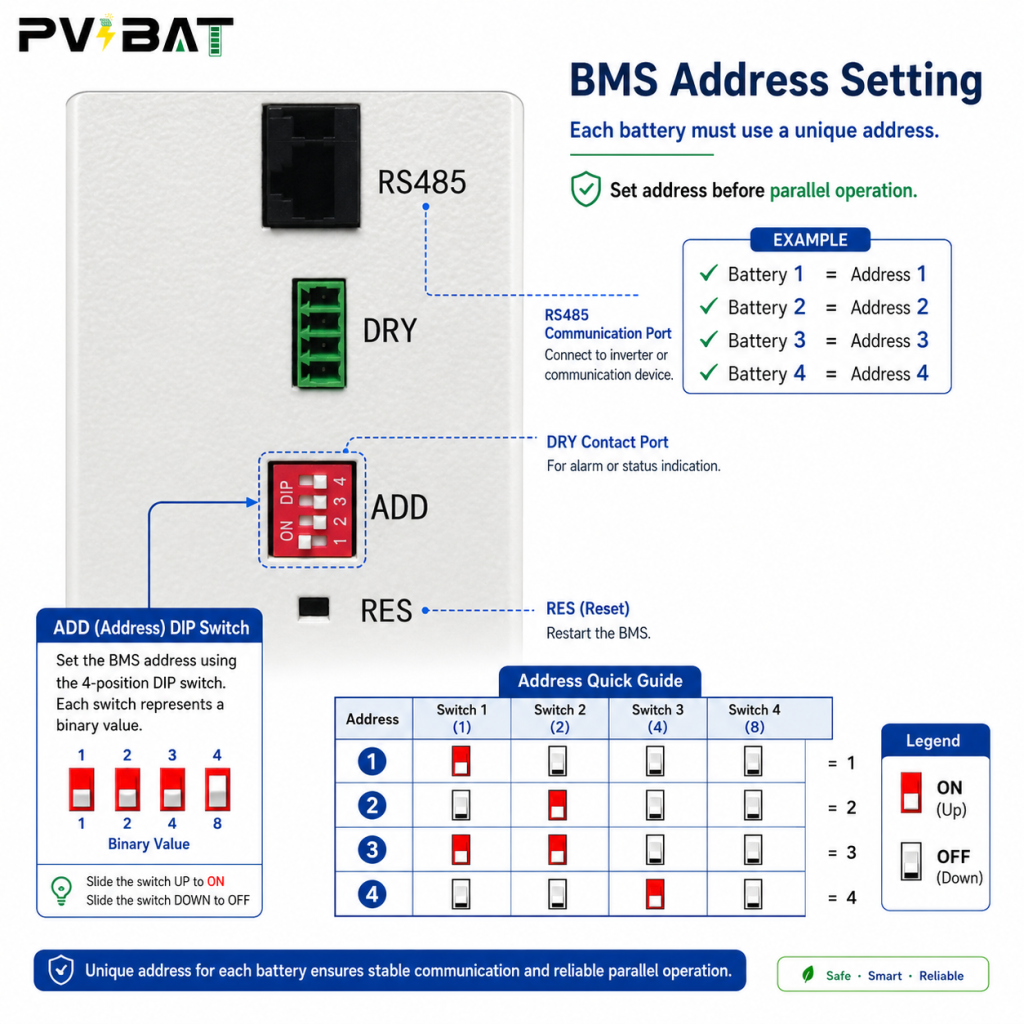
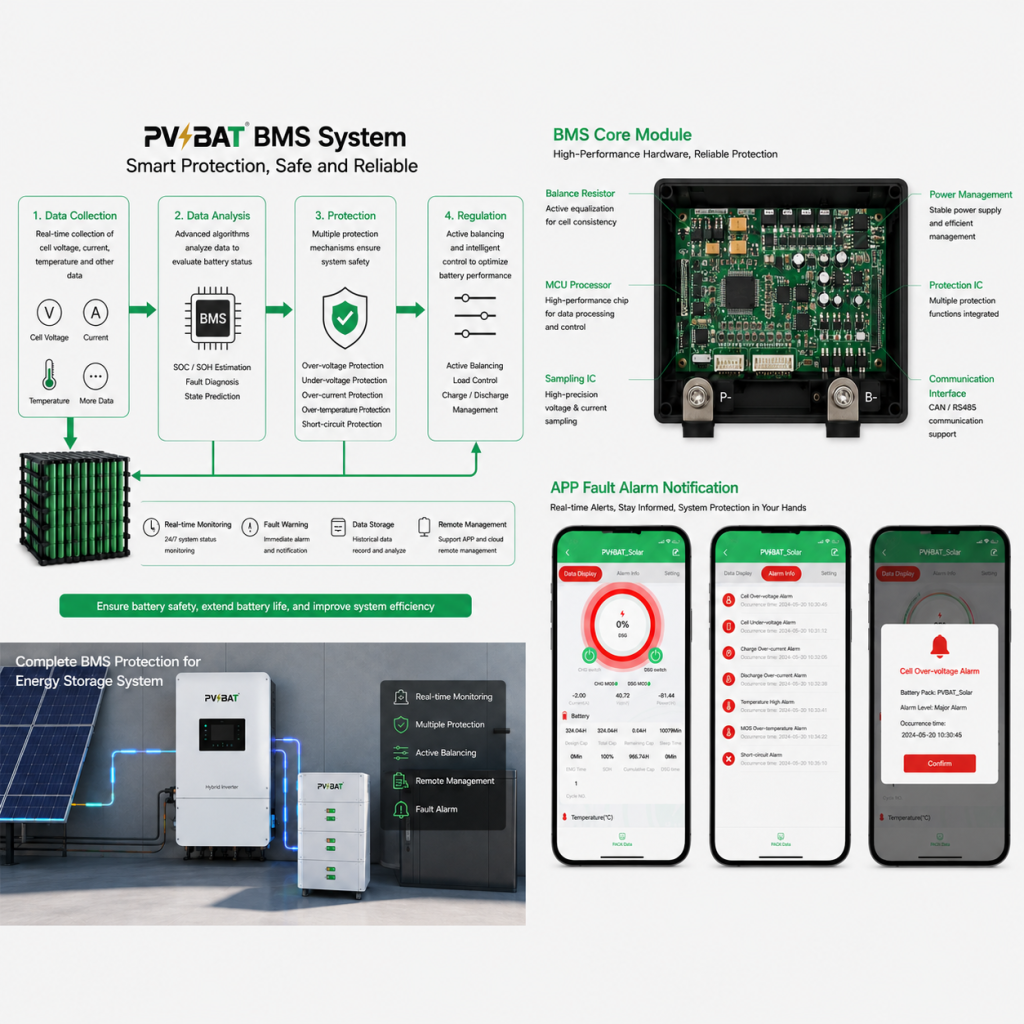
The safe operation of lithium-ion batteries relies heavily on the core BMS (Battery Management System)—it acts as the “brain” of the battery, responsible for real-time monitoring of battery status, adjusting charge and discharge parameters, and preventing safety hazards. When selecting lithium-ion batteries, many users often focus solely on capacity and price, overlooking the importance of the BMS system. This can ultimately lead to issues such as overcharging, over-discharging, and swelling, shortening the battery’s lifespan and even causing safety incidents. The intelligent BMS system built into PVBAT lithium-ion batteries, with its precise monitoring and comprehensive protection features, serves as the cornerstone of safe battery operation. It is also one of PVBAT’s core technologies, highlighting the advantages of the intelligent BMS battery management system. The core advantage of the PVBAT lithium-ion battery BMS system is first and foremost its “comprehensive monitoring.” It collects key data such as battery voltage, current, temperature, and SOC (State of Charge) in real time to accurately assess the battery’s operational status. Upon detecting any abnormalities (such as excessive voltage or temperature), it immediately triggers protective mechanisms to halt charging or discharging, thereby preventing battery damage. Taking a 48V 628Ah lithium-ion battery as an example, its BMS system can monitor the status of each individual cell in real time, ensuring voltage balancing among cells and preventing overcharging or over-discharging of any single cell. This effectively extends the overall battery life and enables long-term, reliable operation of the lithium-ion battery. Secondly, it features “intelligent adjustment.” The BMS system automatically adjusts the charging and discharging currents and voltages based on the battery’s operating status and ambient temperature, ensuring the battery operates under optimal parameters. For example, in low-temperature environments, it automatically reduces the charging current to prevent damage caused by charging at low temperatures; when the battery is nearly fully charged, it automatically switches to float charging mode to prevent overcharging, while compensating for self-discharge to maintain stable battery capacity, demonstrating the advantages of intelligent BMS regulation. Furthermore, the PVBAT lithium-ion battery BMS system also features “communication compatibility” and “fault alarm” functions. It supports mainstream communication protocols such as CAN and RS485, enabling seamless integration with PVBAT inverters and inverters from other brands to achieve coordinated system operation. When a battery fault occurs (such as a short circuit or cell failure), it sends alarm signals via LED indicators and the app, promptly alerting users to address the issue, thereby preventing safety hazards from escalating and ensuring the safety of the energy storage lithium-ion batteries. From an industry perspective, the well-designed PVBAT BMS system not only enhances the safety and service life of lithium-ion batteries but also drives the standardization of the energy storage battery industry. By providing users with more reliable energy storage solutions, it has become a benchmark for lithium-ion battery BMS systems.

Unveiling the PVBAT Lithium-Ion Battery BMS System: Why Does It Ensure Safe and Long-Lasting Battery Performance? Read More »

第四

A Guide to Avoiding Pitfalls When Installing PV Storage Systems: PVBAT Engineers Walk You Through the Process Step by Step

The quality of a photovoltaic energy storage system’s installation directly determines the equipment’s operational efficiency, safety, and service life. Many users experience equipment malfunctions, low power generation efficiency, and even safety hazards during installation due to non-standard procedures and neglect of details. As a professional brand with deep expertise in the energy storage sector, PVBAT has drawn upon years of experience in installing photovoltaic energy storage systems to compile a practical guide to avoid common pitfalls. Our professional engineers will walk you through the correct procedures step-by-step, helping you steer clear of industry-wide mistakes to ensure your home photovoltaic energy storage system is installed properly, guaranteeing stable operation and helping you avoid common installation pitfalls. First, pre-installation preparations must not be overlooked. Verify that the installation environment meets requirements: keep the system away from flammable, explosive, or corrosive materials; avoid direct sunlight and exposure to rain; ensure the installation surface is level and secure; and allow sufficient space for heat dissipation (e.g., the TIGER-T4-72 requires a clearance of at least 4 inches). Additionally, ensure you have all necessary specialized tools on hand, such as insulated gloves, insulated boots, a multimeter, and wire strippers. Avoid using non-specialized tools, which can lead to loose connections or short circuits, thereby laying a solid foundation for a compliant PV storage installation. Secondly, the wiring process is the core of the installation and also the stage most prone to errors. Whether connecting the hybrid inverter to the battery or the grid, or connecting the solar panels to the inverter, it is essential to strictly distinguish between positive and negative terminals to prevent reverse connection (which can directly damage the inverter and battery); When wiring, terminal screws must be tightened to the torque specified in the manual (e.g., 24.5 Nm for a 3kW inverter battery connection) to prevent overheating caused by poor contact; simultaneously, relevant cables must be threaded through ferrite rings and wound as required (e.g., four turns for battery communication cables) to effectively reduce electromagnetic interference and ensure the safety of the PV inverter wiring. Finally, post-installation commissioning is critical. After installation is complete, first verify that all wiring is correct and secure; only then should power be connected. During commissioning, focus on checking the equipment’s communication status, power generation efficiency, and energy storage functionality to ensure all components are working together properly. Additionally, users should be trained in basic operating procedures and daily inspection points—such as how to view data on the LCD display and how to respond to simple fault alarms—to empower them to independently commission their PV storage systems. All PVBAT products come with detailed installation manuals, and professional technical support is available. Users can contact engineers at any time for one-on-one installation guidance to ensure that every system is installed according to standards and operates safely, providing professional solutions to PV storage installation challenges.

A Guide to Avoiding Pitfalls When Installing PV Storage Systems: PVBAT Engineers Walk You Through the Process Step by Step Read More »