32kWh LiFePO4 Battery Cabinet vs Wall-Mounted Home Batteries
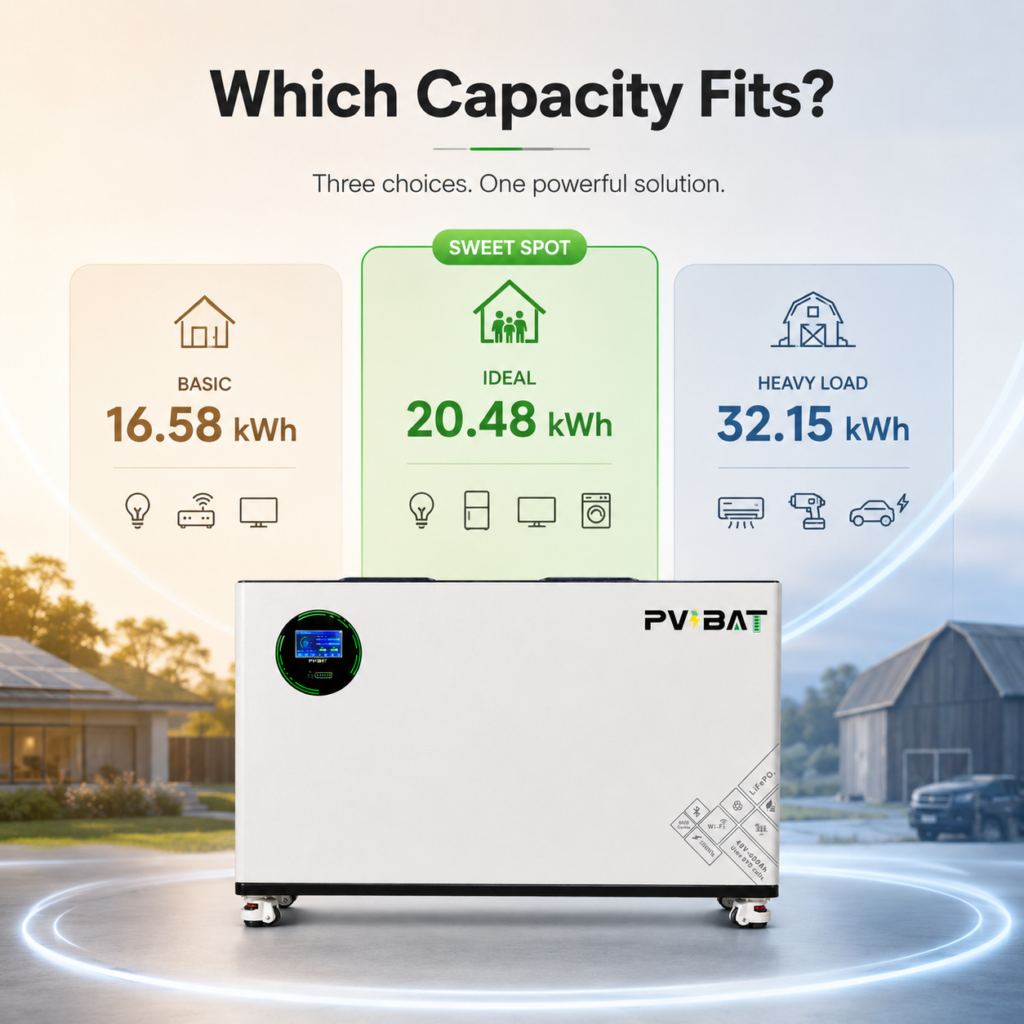
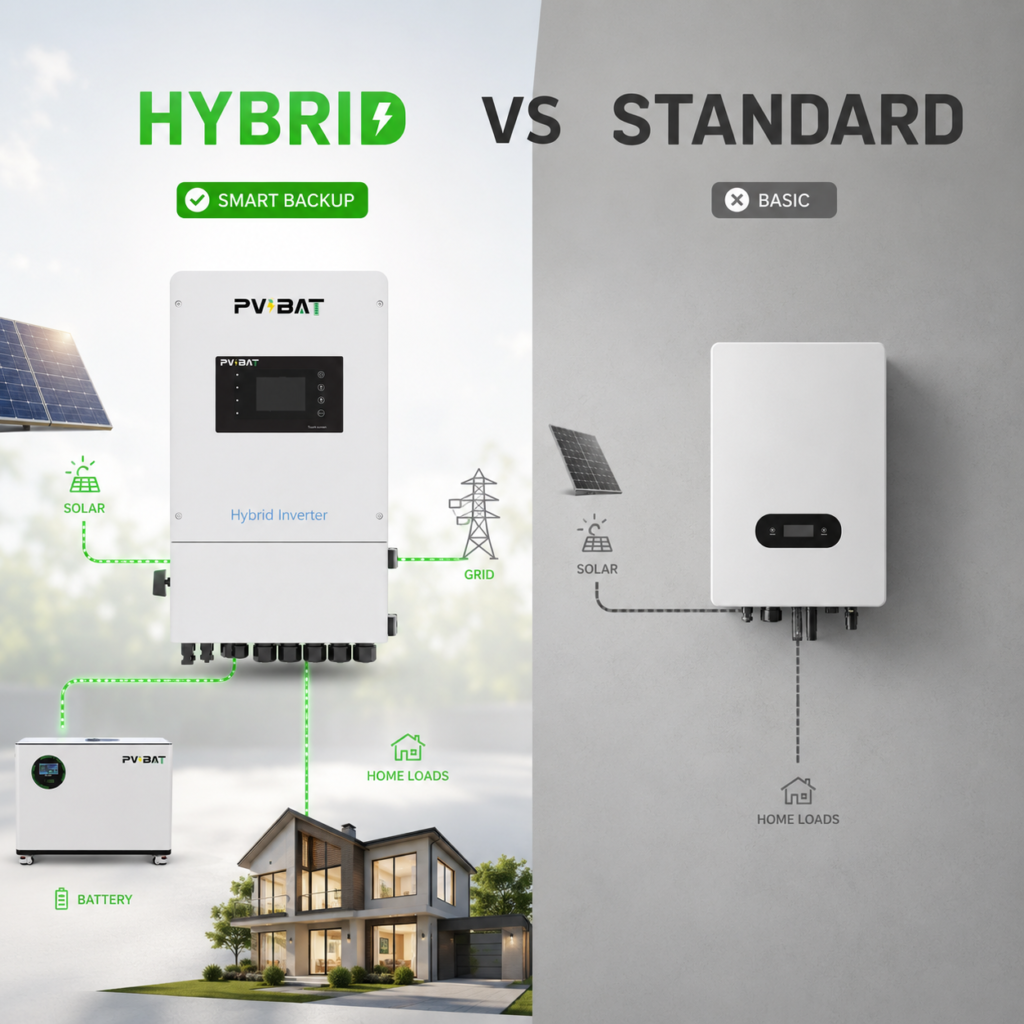
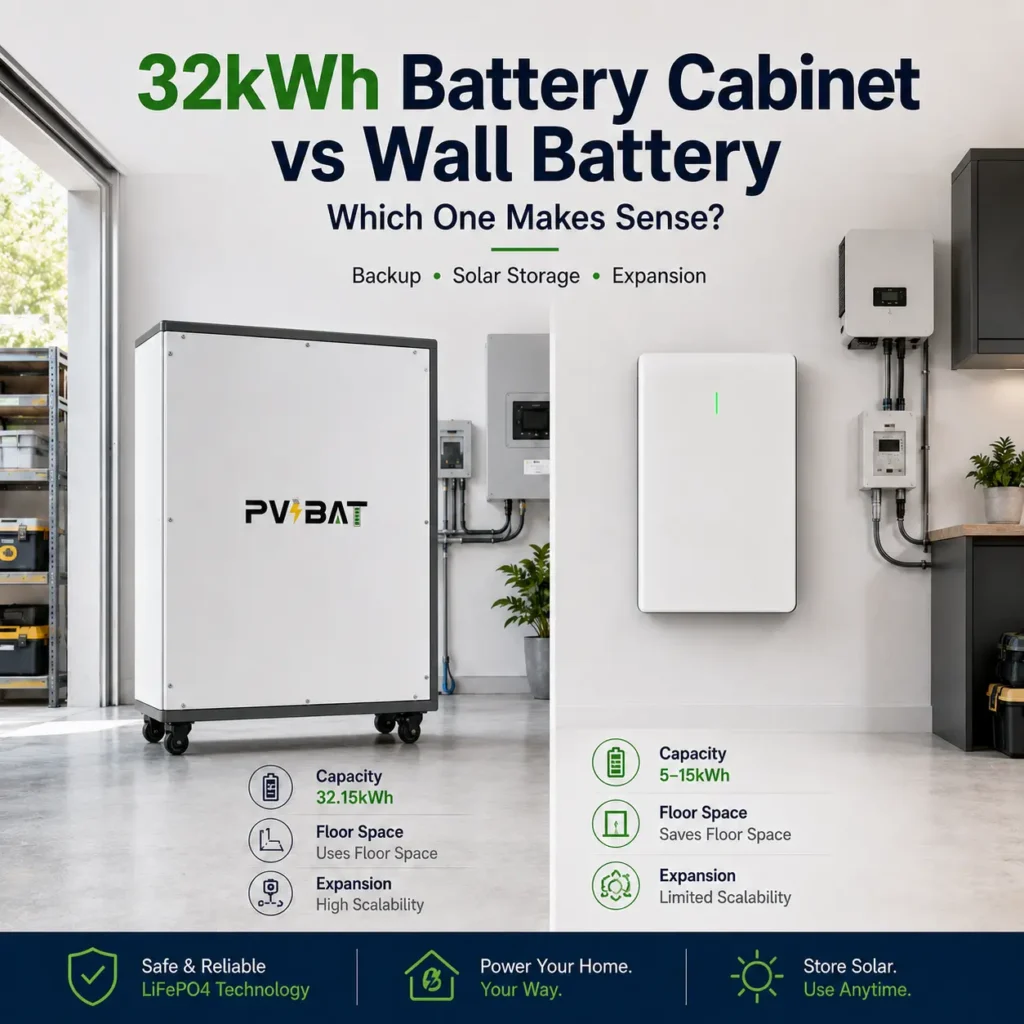
32kWh LiFePO4 Battery Cabinet vs Wall-Mounted Home Batteries: Which One Makes Sense? Home battery storage is no longer limited to small wall-mounted units in a garage. As homeowners, farms, and small businesses look for longer backup time, larger battery cabinets are becoming a serious option. One example is the PVBAT Elephant 32.15kWh LiFePO4 battery cabinet. With 51.2V nominal voltage and 628Ah capacity, it is designed for larger energy storage applications where one compact wall battery may not be enough. But is a battery cabinet the right choice for your project? Or would a smaller wall-mounted battery make more sense? What Is a LiFePO4 Battery Cabinet? A LiFePO4 battery cabinet is a larger battery storage unit built around lithium iron phosphate chemistry. It is typically used with an inverter, hybrid inverter, MPPT charger, or energy storage controller. Unlike an all-in-one power station, a battery cabinet is usually not a complete AC power source by itself. It stores DC energy. To power home appliances, it must be connected to the right inverter system. The PVBAT Elephant is a 32.15kWh battery cabinet. It is not a standalone plug-and-play AC generator. It is designed to be part of a larger energy storage system. Why Choose 32.15kWh Instead of a Smaller Battery? The main reason is runtime. A small battery can keep essential devices alive for a short outage. A larger battery cabinet can support more serious backup needs: refrigeration, lighting, communication, pumps, selected appliances, and longer overnight use. For homes with solar, a larger battery can store more daytime energy for evening and nighttime use. For off-grid systems, more capacity means more flexibility during cloudy weather or high-use periods. For commercial and farm use, a larger battery can support equipment, controls, security systems, communication devices, and critical loads that cannot go down easily. Battery Cabinet vs Wall-Mounted Battery Wall-mounted batteries are popular because they look clean and save floor space. They are often suitable for residential installations with moderate energy needs. If your backup goal is limited to a few circuits and short outages, a wall-mounted solution may be enough. A battery cabinet is more appropriate when: You need higher total capacityYou want easier expansionYou have floor space availableYou are building a larger solar storage systemYou are supporting a farm, workshop, warehouse, or small commercial siteYou want a centralized battery bank rather than several smaller units The tradeoff is that a cabinet system may require more planning. You need compatible inverters, proper cabling, overcurrent protection, communication setup, and code-compliant installation. Why LiFePO4 Chemistry Matters LiFePO4 is widely used in modern energy storage because it offers strong thermal stability, long cycle life, and reliable performance for stationary battery systems. For home and commercial storage, those qualities matter more than chasing the smallest possible battery size. A battery backup system is not a phone battery. It may sit in a garage, utility room, farm building, or equipment area for years. It needs to be stable, serviceable, and predictable. That is one reason LiFePO4 is commonly selected for energy storage projects. Inverter Compatibility Is Critical A battery cabinet needs the right inverter. This is one of the most important points buyers should understand before ordering. The inverter determines AC output voltage, power capacity, surge capability, grid interaction, solar input behavior, and backup circuit design. The battery stores energy. The inverter turns that energy into usable AC power. The Elephant 32.15kWh battery supports communication options such as CAN and RS485, which can help compatible equipment exchange battery data. However, the entire system should be designed as a package, not assembled randomly. Before buying, confirm: Battery voltageInverter compatibilityCommunication protocolCharge and discharge limitsBreaker and cable sizingParallel expansion planLocal electrical code requirements Expansion Potential One of the major advantages of a cabinet-style battery is expansion. The Elephant system can be used in larger configurations when designed properly with compatible equipment. That makes it suitable for users who want to start with one large cabinet and expand later. This is especially useful for properties with growing power needs: farms adding equipment, homes adding solar, workshops adding tools, or businesses adding backup requirements. Who Should Consider the Elephant 32.15kWh Battery Cabinet? The Elephant battery cabinet makes sense for homeowners, installers, and business owners who are building a more serious energy storage system. It is well suited for solar storage, backup power, off-grid energy, farm energy systems, and commercial reserve power. It may not be the best fit for someone who wants a small plug-in battery for camping or charging phones. It is a system component for real energy storage, not a small consumer gadget. FAQ Is the Elephant 32.15kWh battery a complete power station? No. It is a LiFePO4 battery cabinet. It needs a compatible inverter or energy storage system to provide AC power. Can I use it for home backup? Yes, when paired with the proper inverter and installed correctly. Is 32.15kWh enough for a home? It can support a significant amount of essential load backup, but the right size depends on your appliances, runtime goals, and inverter setup. Can it connect with solar? Yes, when used with compatible solar charging and inverter equipment.
32kWh LiFePO4 Battery Cabinet vs Wall-Mounted Home Batteries Read More »