第十六 2

Don’t Panic During a Power Outage: Real-World Testing of the PVBAT Energy Storage System’s Emergency Power Supply

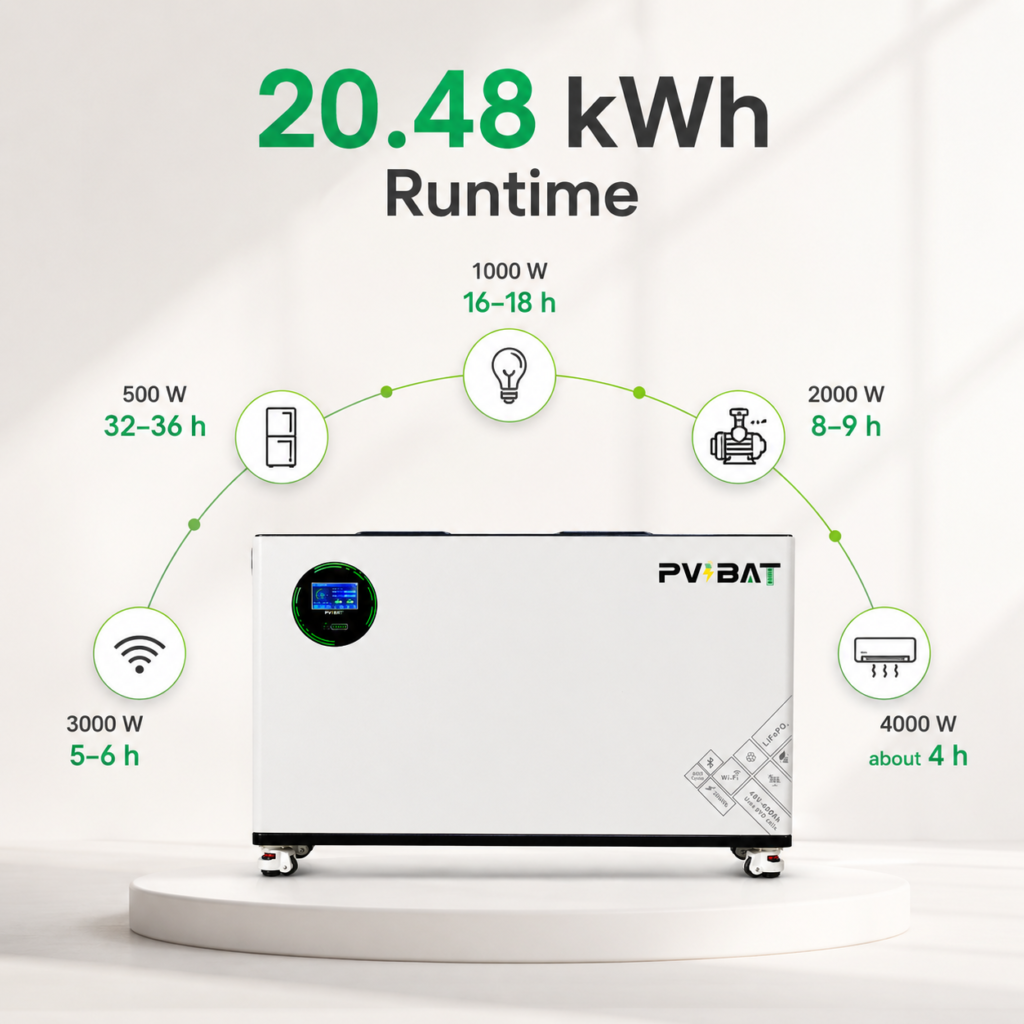
Power outages are unexpected events that both residential and commercial users may face, especially during summer peak demand periods or severe weather conditions such as heavy rains and typhoons. Power outages not only disrupt daily life and business operations but can also result in significant financial losses. To verify the emergency power supply capabilities of the PVBAT energy storage system, we conducted real-world field tests to determine whether it can truly meet power demands during outages and provide users with peace of mind. This emergency power supply test focused on validating the PVBAT’s emergency power capabilities, offering a reference for users selecting emergency energy storage equipment. Test Scenario 1: Residential Emergency Power Supply (using a PVBAT 6kW hybrid inverter + 48V 628Ah lithium battery). Simulating a typical household power usage scenario, we connected loads such as a refrigerator, air conditioner (1.5 HP), desk lamp, and computer, with a total load power of approximately 3 kW. After the grid power was manually disconnected, the inverter rapidly switched to backup power mode in less than 0.5 seconds, with no noticeable power interruption, and all loads continued to operate normally. During the continuous power supply test, with the battery fully charged, it provided stable power for approximately 10 hours, fully meeting a household’s normal daily power needs. This effectively prevented issues such as food spoilage in the refrigerator and air conditioner shutdown caused by power outages, demonstrating the advantages of residential emergency energy storage. Test Scenario 2: Commercial Emergency Power Supply (using a PVBAT 12kW hybrid inverter paired with two 48V 628Ah lithium-ion batteries in parallel). Simulating a convenience store power usage scenario, the system connects to loads including freezers (2 units), cash registers (2 units), lighting, and air conditioning, with a total load power of approximately 7 kW. After the grid power is cut off, the inverter quickly switches to backup power mode, and all commercial equipment continues to operate normally. With fully charged batteries, it can provide stable power for approximately 10 hours, which is sufficient to sustain the convenience store through a short-term power outage. This prevents economic losses such as food spoilage and the inability to process payments, demonstrating the value of commercial emergency energy storage. Test Scenario 3: Outdoor Emergency Power Supply (paired with the PVBAT TIGER-T4-72 integrated energy storage system). Simulating an outdoor performance scenario, the system was connected to loads such as sound systems, projectors, and LED screens, with a total load power of approximately 10 kW. After the grid power was cut off, the TIGER-T4-72 immediately activated emergency power supply, and all equipment continued to operate normally. With the battery fully charged, it provided a stable power supply for approximately 2.5 hours, fully meeting the power requirements for small-scale outdoor performances. By eliminating reliance on the grid and achieving self-sufficient power supply, this demonstrates the system’s capabilities in outdoor emergency energy storage. Test results demonstrate that the PVBAT energy storage system delivers stable and reliable emergency power supply, featuring fast switching and extended runtime. It effectively addresses power outages in various scenarios—including residential, commercial, and outdoor settings—providing users with peace of mind through assured emergency power protection. This capability represents one of the core competitive advantages of PVBAT products, establishing the brand as a trusted provider of emergency energy storage solutions.

Don’t Panic During a Power Outage: Real-World Testing of the PVBAT Energy Storage System’s Emergency Power Supply Read More »

第十二 2

PVBAT 48V 628Ah Lithium-Ion Battery Parallel Connection Guide: Hassle-Free Capacity Expansion, Stable and Efficient

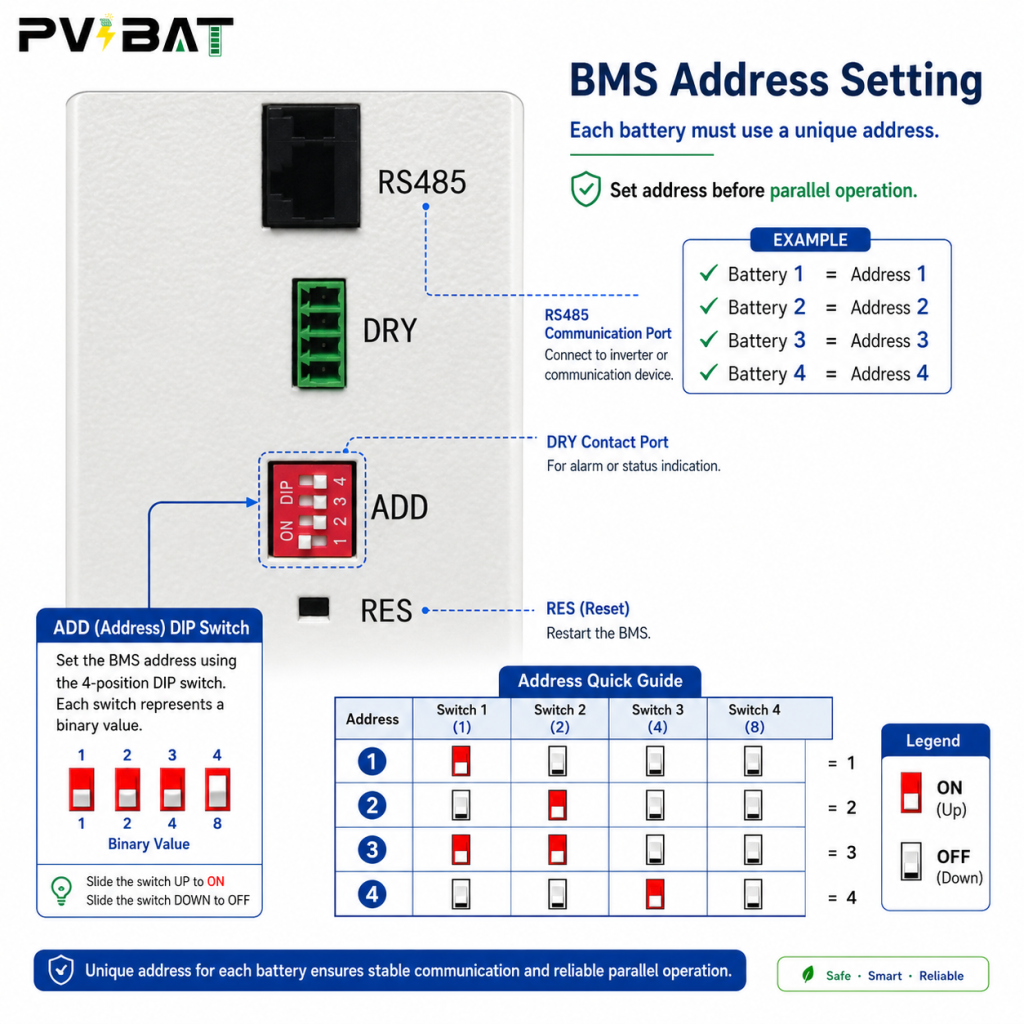
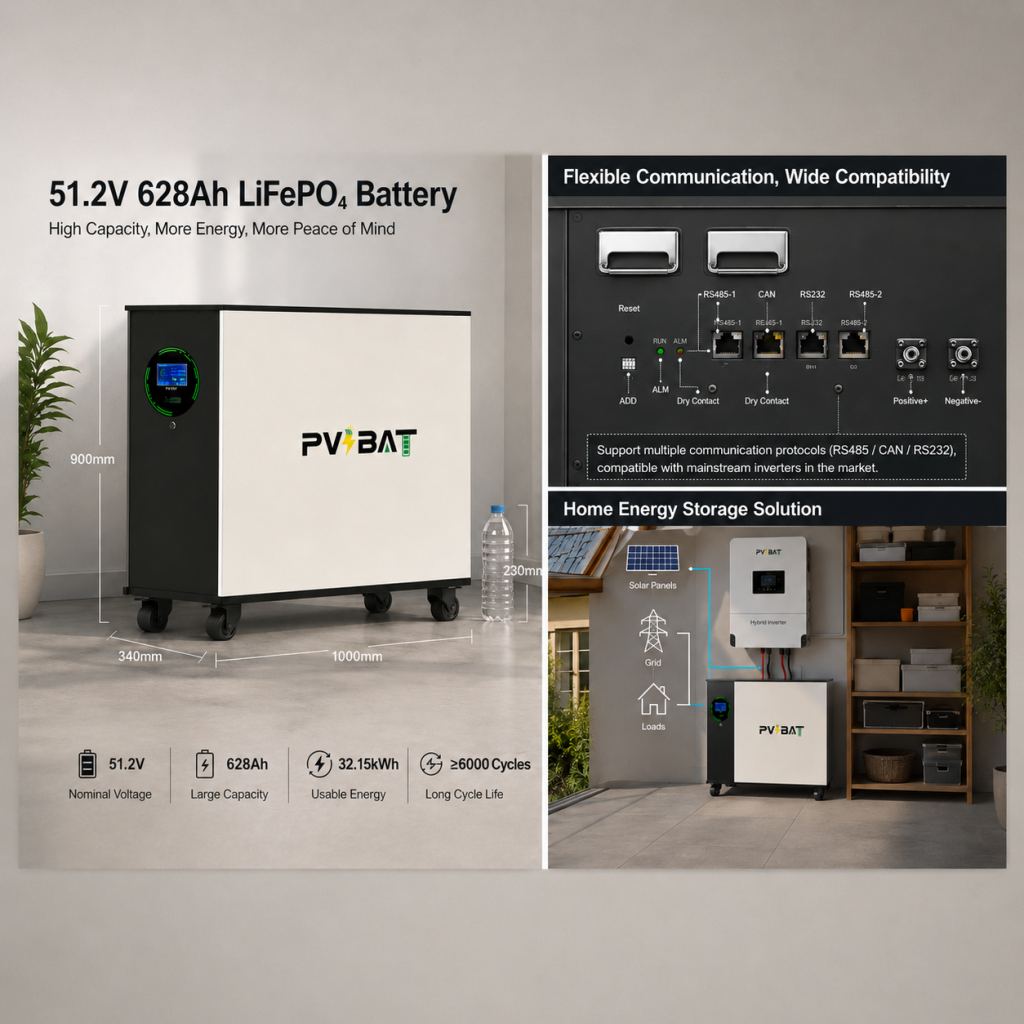
For scenarios with high power demands, such as medium-to-large households and small commercial spaces, the capacity of a single lithium-ion battery is often insufficient. In such cases, multiple lithium-ion batteries must be connected in parallel to increase capacity. However, connecting lithium-ion batteries in parallel requires strict adherence to wiring standards, address configuration, and device compatibility; improper operation can easily lead to uneven charge distribution among batteries, communication failures, or even equipment damage. The PVBAT 48V 628Ah lithium-ion battery supports multi-module parallel operation. Combined with a detailed lithium-ion battery parallel connection guide, it allows users to expand capacity with confidence, ensuring stable and efficient system operation and helping users achieve energy storage capacity expansion. First, preparations before parallel connection. Ensure that all lithium batteries to be connected in parallel are of the PVBAT 48V 628Ah model. Avoid mixing different models or brands of lithium batteries (which can easily lead to charge imbalance and affect battery life). Check the status of each lithium battery to ensure there are no faults or damage, and that the SOC (State of Charge) is consistent (it is recommended to charge them all to 60%-80%). Prepare dedicated parallel connection boxes, circuit breakers, and communication cables, ensuring the cable specifications meet requirements (refer to the manual for recommended specifications) to avoid safety hazards caused by incompatible cables, and complete preparations for lithium battery parallel connection. Second, the parallel connection wiring procedure. Move all lithium batteries to the installation location, ensuring the installation surface is level and secure, and leaving sufficient space for heat dissipation to prevent battery overheating; Using the junction box and circuit breakers, connect the positive and negative terminals of multiple lithium-ion batteries in parallel. Strictly distinguish between positive and negative terminals during wiring to prevent reverse connection; connect the communication cables in the order of “Host Link Port OUT → Slave Link Port IN,” connecting all paralleled batteries sequentially. Ensure all connections are secure and free of looseness to prevent poor contact, and perform the lithium-ion battery parallel wiring according to standard procedures. Next, configure the addresses. When multiple batteries are used in parallel, set the addresses via the DIP switches on the BMS to distinguish between different battery modules and avoid address conflicts (refer to the manual for DIP switch settings; addresses 1–20 can be freely selected). Alternatively, you can use the automatic DIP switch function: set all battery DIP switches to the “OFF” position, connect the communication cables, and power on the system. The master unit will automatically assign addresses, eliminating the need for manual configuration. This method offers greater convenience, reduces the likelihood of errors, and ensures proper address setup for the parallel-connected lithium-ion batteries. Finally, perform post-parallel connection debugging. After connection is complete, power on the system to check the communication status of all batteries and ensure there are no communication faults; check the SOC and voltage of each battery to ensure power balance; run the system for a period of time to check the battery charge and discharge status, ensuring the parallel system operates stably and efficiently. If any abnormalities occur, promptly check the wiring and address settings, or contact a PVBAT after-sales engineer for assistance to ensure proper debugging of the lithium battery parallel system.

PVBAT 48V 628Ah Lithium-Ion Battery Parallel Connection Guide: Hassle-Free Capacity Expansion, Stable and Efficient Read More »

第11

Comparative Review: PV-BAT Hybrid Inverters vs. Standard Inverters—What’s the Difference?

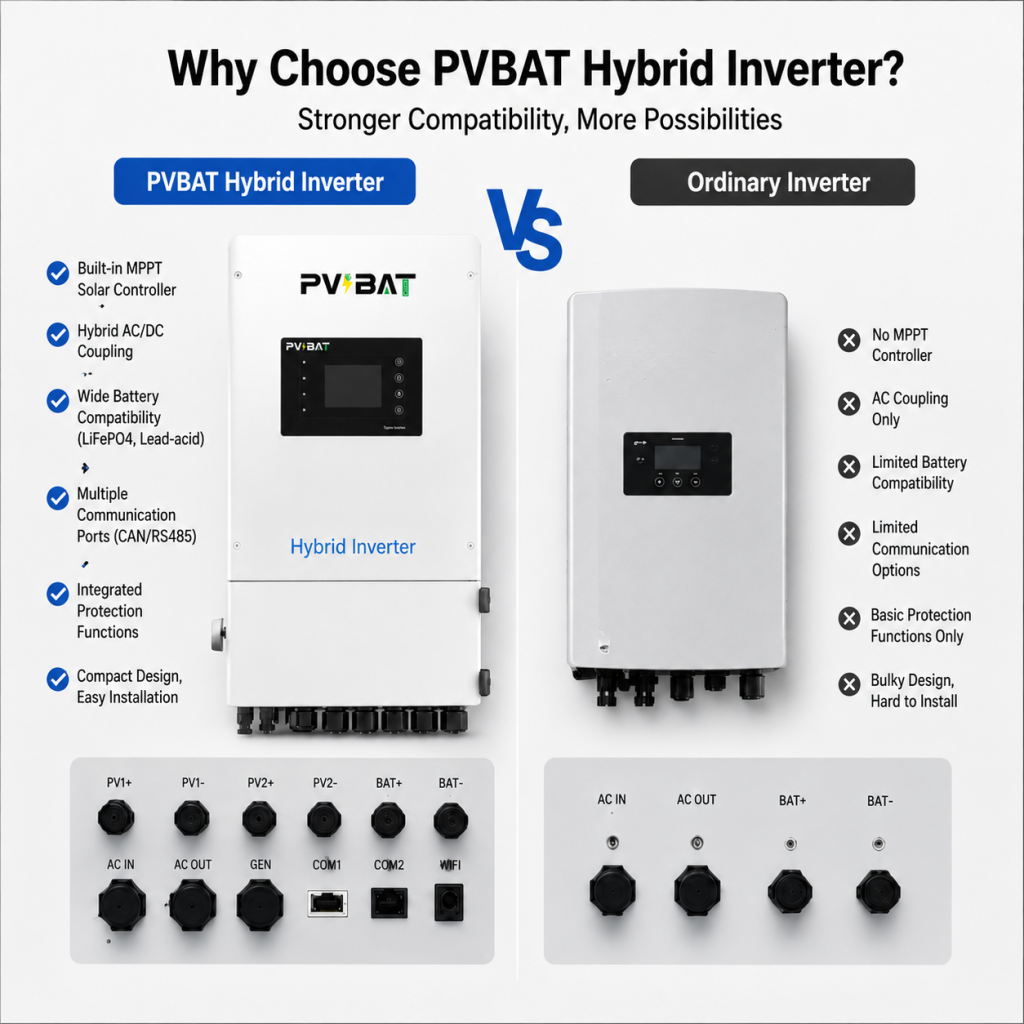
In the energy storage market, there is a wide variety of inverter products available. Users often overlook the differences between standard inverters and hybrid inverters. Many users make uninformed choices, resulting in their energy needs not being met and even leading to a waste of resources. Today, through a real-world comparison, we will analyze the core differences between PVBAT hybrid inverters and standard inverters to help users clarify their needs and select the energy storage core equipment that best suits them. We will also provide a comparative evaluation of inverters to assist users in choosing high-quality hybrid inverters. Difference 1: Functionality. Conventional inverters only perform a single conversion—“PV power generation to AC electricity”—and cannot support energy storage or backup power supply. When the PV system is not generating power, users must rely on the grid, making them unable to handle power outages and limiting their practicality; In contrast, PVBAT hybrid inverters integrate four key functions: PV charging, battery storage, grid interaction, and backup power supply. They enable closed-loop management of “self-generation and self-consumption, surplus power storage, and emergency backup,” perfectly meeting the diverse energy needs of households and serving as the epitome of multifunctional hybrid inverters. Difference 2: Level of Intelligence. Most conventional inverters lack intelligent control systems, making them unable to automatically adjust power generation output or power supply priorities. They require manual intervention, involve cumbersome operations, and demand a certain level of technical expertise from users; The PVBAT hybrid inverter features a built-in intelligent control system, equipped with an LCD touchscreen and a mobile app for monitoring. It displays real-time operational data, automatically optimizes power supply priorities among PV, the grid, and the battery, and supports switching between multiple operating modes. It requires no manual intervention, is easy to operate, even for beginners, highlighting the advantages of smart hybrid inverters. Difference 3: Compatibility and Scalability. Most standard inverters are compatible only with specific types and capacities of batteries and solar panels, offering poor scalability. They cannot be expanded to meet user needs, resulting in high costs for future upgrades; The PVBAT hybrid inverter is compatible with various battery types, including lead-acid and lithium batteries, and supports parallel operation of multiple units. It allows for flexible expansion based on the PV system’s power output and electricity demand, making it suitable for households of different sizes and energy needs. With more convenient future upgrades, it is the preferred choice for highly scalable inverters. Difference 4: Safety and Reliability. Conventional inverters have inadequate protection mechanisms, making them prone to issues such as overcurrent, overvoltage, and overheating, which can shorten equipment lifespan and even pose safety hazards; PVBAT hybrid inverters feature built-in multi-layer protection mechanisms against overcurrent, overvoltage, overheating, short circuits, and ground faults. They comply with international safety standards, undergo rigorous quality testing, and offer a long service life. Additionally, they provide comprehensive after-sales support, ensuring greater peace of mind and making them the safest and most reliable hybrid inverters. Through this comparison, it is evident that the distinction between PVBAT hybrid inverters and standard inverters lies not only in the comprehensiveness of their features but also in their precise understanding of user needs and strict control over product quality. As such, they are the ideal core inverters for home energy storage systems.

Comparative Review: PV-BAT Hybrid Inverters vs. Standard Inverters—What’s the Difference? Read More »

第十

Home Energy Storage System Maintenance Guide: PVBAT Shows You How to Extend the Lifespan of Your Equipment

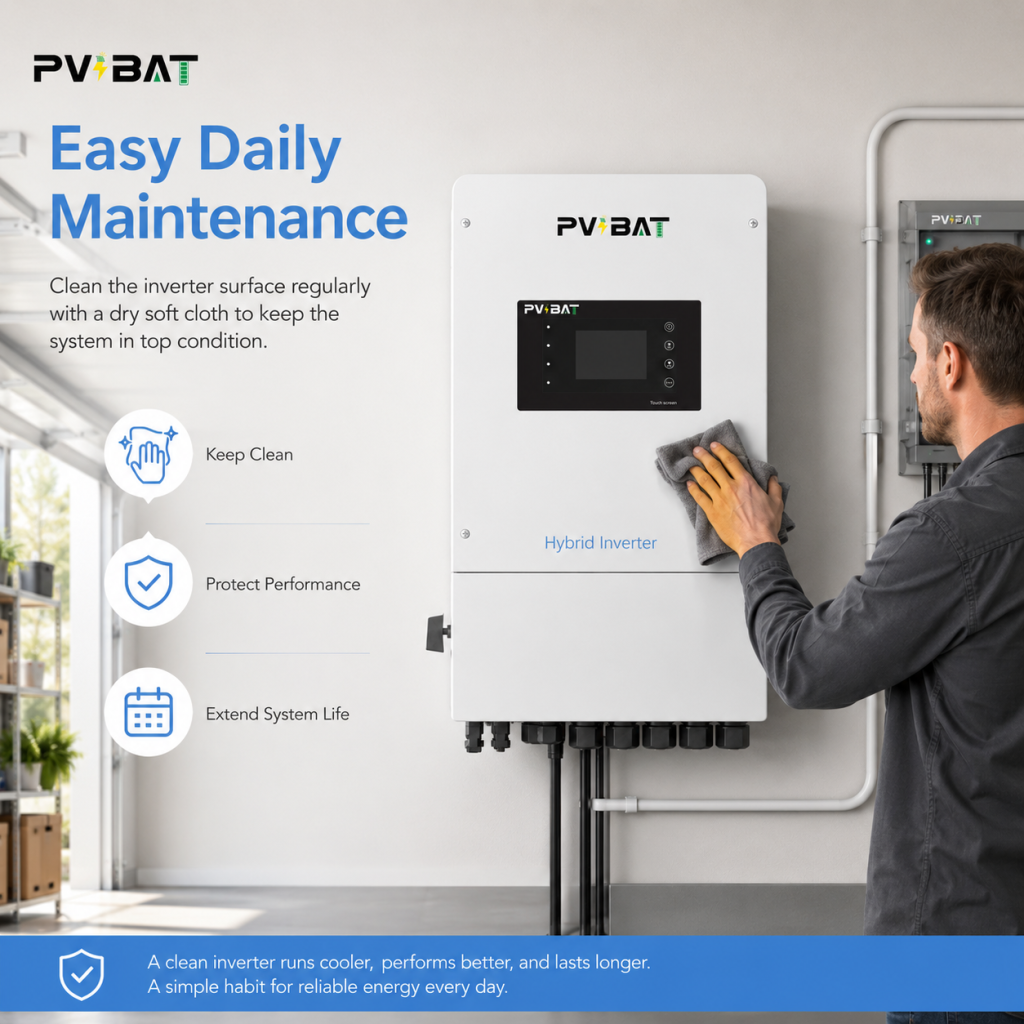
The service life of a home energy storage system (inverter + battery + solar panels) depends not only on the quality of the products themselves but is also closely related to daily maintenance. Many users neglect routine maintenance after installing their systems, leading to equipment failures, reduced efficiency, and a shorter lifespan, which in turn increases operating costs. Based on the characteristics of its products, PVBAT has compiled a practical maintenance guide for home energy storage systems to help users properly maintain their equipment, extend its service life, ensure long-term stable operation, and assist users in performing routine maintenance on their PV storage systems. First, daily maintenance of the inverter. Regularly inspect the inverter’s installation environment to ensure adequate ventilation and that no debris is obstructing airflow, thereby preventing the equipment from overheating; Regularly clean dust and debris from the inverter’s surface using a dry, soft cloth; never rinse with water to prevent short circuits; regularly inspect the terminal blocks to ensure connections are secure, with no loosening or oxidation; monitor the inverter’s operating status; if a fault alarm occurs (such as error codes F01–F64), contact an after-sales engineer immediately for resolution—never disassemble the unit yourself to avoid causing further damage—and perform routine inverter maintenance. Second, daily maintenance of lithium-ion batteries. Lithium-ion batteries should be stored in a dry, well-ventilated, and cool environment, away from direct sunlight and rain. Maintain a storage temperature between 10°C and 35°C to prevent extreme temperatures from affecting battery performance. If the battery will not be used for an extended period, charge it to 60% SOC (State of Charge). Every three months, discharge it to 30% and then recharge it to 60% to prevent irreversible damage caused by deep discharge; Regularly inspect battery wiring and connectors to ensure secure connections with no looseness or damage. If the battery exhibits abnormalities such as swelling, leakage, or unusual odors, stop using it immediately, contact after-sales service for resolution, and ensure proper maintenance of the energy storage lithium-ion batteries. Finally, maintenance of the solar panels and the entire system. Regularly clean dust and stains from the surface of the solar panels to prevent shading and ensure optimal power generation efficiency; Inspect the solar panel mounts to ensure they are secure, with no loosening or deformation; regularly inspect the system’s cabling to ensure there is no damage or aging, preventing short circuits; conduct a comprehensive system commissioning once a year to check the coordinated operation of the inverter, battery, and solar panels, promptly identifying and resolving potential issues to prevent problems before they arise, and ensuring proper daily maintenance of the solar panels and comprehensive maintenance of the energy storage system. PVBAT recommends that users perform regular maintenance on their energy storage systems in accordance with the maintenance guidelines. Users may also contact PVBAT’s professional after-sales team to arrange periodic inspection services, ensuring long-term stable operation of the system, maximizing equipment lifespan, reducing operating costs, and receiving professional support for energy storage system maintenance.
Home Energy Storage System Maintenance Guide: PVBAT Shows You How to Extend the Lifespan of Your Equipment Read More »

第八

Solving the Challenge of Storing Surplus Solar Power: A Detailed Look at the PVBAT Hybrid Inverter and Lithium-Ion Battery Solution

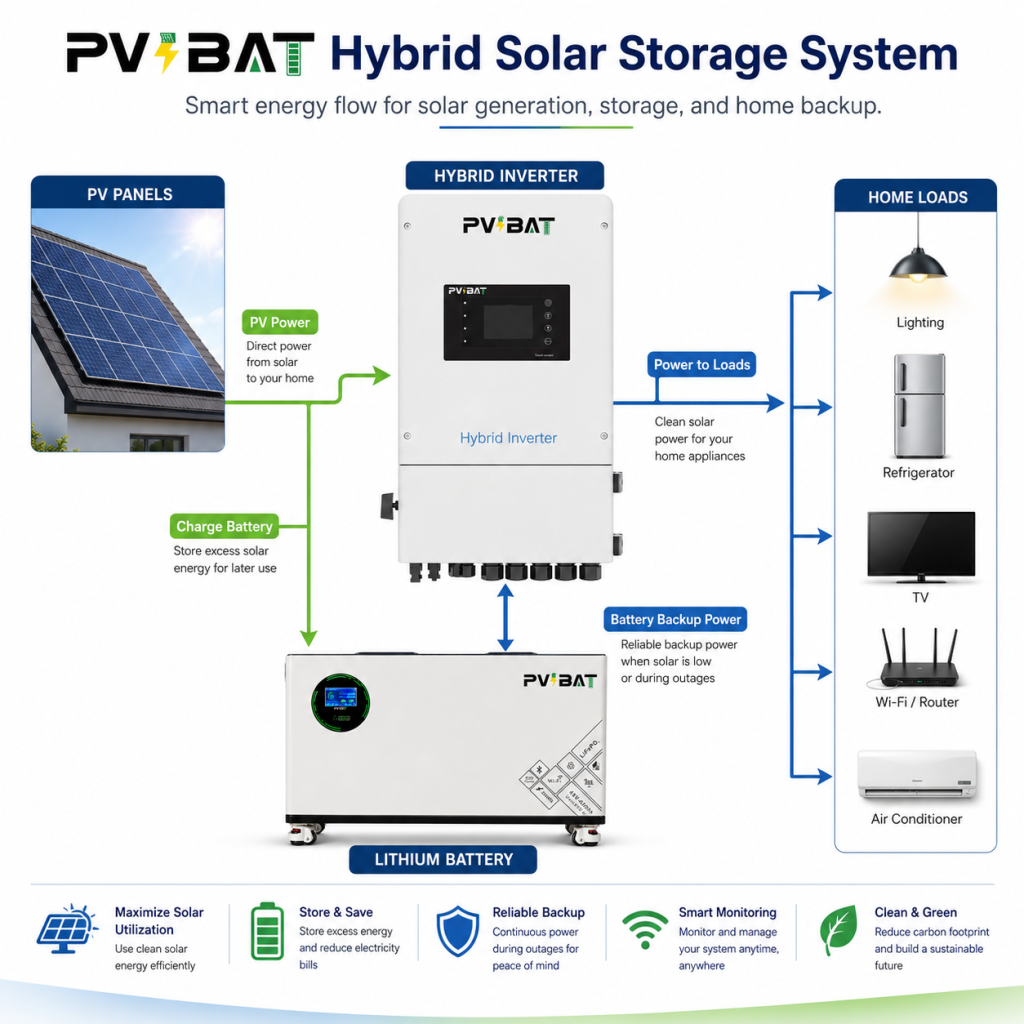
Many households face a common challenge after installing a solar power system: solar power generation is intermittent. During the day when sunlight is abundant, the system generates excess electricity that cannot be stored and must be fed into the grid (in some regions, the feed-in tariff is low, resulting in limited returns). At night or on cloudy days, the solar system does not generate power, forcing households to rely on the grid for electricity. This prevents the full utilization of solar resources and leads to energy waste. PVBAT’s “hybrid inverter + lithium battery” solution precisely addresses the challenge of storing surplus solar power, maximizing the utilization of solar energy and enabling households to truly achieve “self-generation for self-consumption, surplus power storage, and emergency backup.” It is an excellent choice for a solar-storage combination solution. The core logic of this solution lies in the hybrid inverter’s intelligent control, which “rationally allocates” solar power: during the day, when solar panels are generating electricity, the inverter prioritizes supplying power to household loads to meet daily energy needs; excess electricity is then fed into the lithium-ion battery via the inverter for proper storage; at night or on cloudy days, when the PV system is not generating power, the inverter automatically switches to a different power supply mode, releasing the stored energy from the lithium-ion battery to power household loads without relying on the grid; when the lithium-ion battery runs low, the inverter switches back to grid power to ensure uninterrupted supply, achieving seamless power transition and perfectly resolving the issue of utilizing surplus solar energy in households. The solution’s key advantages lie in its “high adaptability and energy efficiency.” The PVBAT hybrid inverter is perfectly matched with its own 48V 628Ah lithium-ion battery, while also being compatible with lithium-ion and lead-acid batteries from other brands. Users can flexibly configure the inverter and battery capacity based on their PV system’s power output and electricity needs, without worrying about compatibility issues, making it a highly adaptable PV storage solution; The inverter’s built-in MPPT technology maximizes the capture of PV power generation, enhancing efficiency and reducing energy waste. The high capacity and long lifespan of the lithium-ion battery ensure the stability and durability of surplus power storage. Long-term use can significantly reduce electricity bills, achieving energy savings and cost reduction through PV systems. Taking a 6kW PV system as an example, when paired with a PVBAT 6kW hybrid inverter and a 48V 628Ah lithium-ion battery, excess solar power generated during the day can be stored in the battery and used to power the home at night. This reduces grid electricity consumption by 10–15 kWh daily, resulting in monthly electricity savings of $50–$100. Additionally, during grid outages, the battery provides power to ensure normal household electricity supply—a win-win solution that highlights the core value of the PVBAT photovoltaic energy storage solution. From an industry perspective, this integrated solution not only addresses the industry-wide challenge of storing surplus solar power but also drives the adoption of distributed solar power, providing a practical pathway toward achieving “carbon reduction” goals. At the same time, it delivers tangible economic benefits to residential users, making it the preferred solution for distributed solar energy storage.

Solving the Challenge of Storing Surplus Solar Power: A Detailed Look at the PVBAT Hybrid Inverter and Lithium-Ion Battery Solution Read More »

第6

Unveiling the PVBAT Lithium-Ion Battery BMS System: Why Does It Ensure Safe and Long-Lasting Battery Performance?

The safe operation of lithium-ion batteries relies heavily on the core BMS (Battery Management System)—it acts as the “brain” of the battery, responsible for real-time monitoring of battery status, adjusting charge and discharge parameters, and preventing safety hazards. When selecting lithium-ion batteries, many users often focus solely on capacity and price, overlooking the importance of the BMS system. This can ultimately lead to issues such as overcharging, over-discharging, and swelling, shortening the battery’s lifespan and even causing safety incidents. The intelligent BMS system built into PVBAT lithium-ion batteries, with its precise monitoring and comprehensive protection features, serves as the cornerstone of safe battery operation. It is also one of PVBAT’s core technologies, highlighting the advantages of the intelligent BMS battery management system. The core advantage of the PVBAT lithium-ion battery BMS system is first and foremost its “comprehensive monitoring.” It collects key data such as battery voltage, current, temperature, and SOC (State of Charge) in real time to accurately assess the battery’s operational status. Upon detecting any abnormalities (such as excessive voltage or temperature), it immediately triggers protective mechanisms to halt charging or discharging, thereby preventing battery damage. Taking a 48V 628Ah lithium-ion battery as an example, its BMS system can monitor the status of each individual cell in real time, ensuring voltage balancing among cells and preventing overcharging or over-discharging of any single cell. This effectively extends the overall battery life and enables long-term, reliable operation of the lithium-ion battery. Secondly, it features “intelligent adjustment.” The BMS system automatically adjusts the charging and discharging currents and voltages based on the battery’s operating status and ambient temperature, ensuring the battery operates under optimal parameters. For example, in low-temperature environments, it automatically reduces the charging current to prevent damage caused by charging at low temperatures; when the battery is nearly fully charged, it automatically switches to float charging mode to prevent overcharging, while compensating for self-discharge to maintain stable battery capacity, demonstrating the advantages of intelligent BMS regulation. Furthermore, the PVBAT lithium-ion battery BMS system also features “communication compatibility” and “fault alarm” functions. It supports mainstream communication protocols such as CAN and RS485, enabling seamless integration with PVBAT inverters and inverters from other brands to achieve coordinated system operation. When a battery fault occurs (such as a short circuit or cell failure), it sends alarm signals via LED indicators and the app, promptly alerting users to address the issue, thereby preventing safety hazards from escalating and ensuring the safety of the energy storage lithium-ion batteries. From an industry perspective, the well-designed PVBAT BMS system not only enhances the safety and service life of lithium-ion batteries but also drives the standardization of the energy storage battery industry. By providing users with more reliable energy storage solutions, it has become a benchmark for lithium-ion battery BMS systems.
Unveiling the PVBAT Lithium-Ion Battery BMS System: Why Does It Ensure Safe and Long-Lasting Battery Performance? Read More »